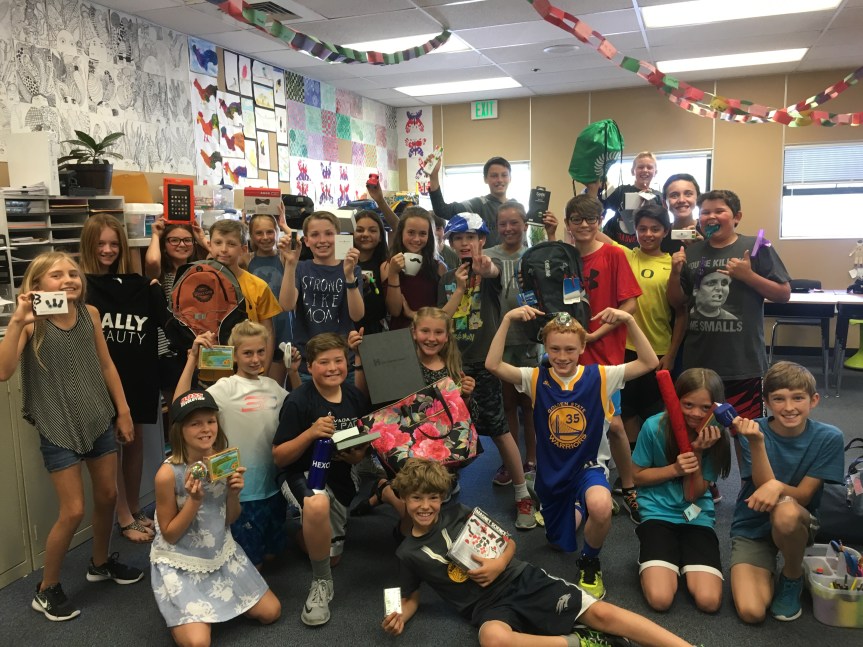
We have been receiving donations all summer from companies interested in helping with our classroom economy and our auctions. Lots of great stuff has been shared and we are fortunate to be getting these things. Look through what has been donated and consider saving for those things that interest you most.
Tag: WCSD
Parent Welcome Package, 2017-2018 Version
Welcome families! Use the links below to retrieve documents from the 2017-2018 Parent Welcome Package. Each item was mailed to you but if you lose track of something or need additional copies, this page can help. Moreover, feel free to share this link with other caregivers who might be curious or need need to what was included. Thank you!
Welcome Letter and Overview of Classroom 2017-2018 version
5th Grade Supply List for 2017-2018
Blog Permission Form
Volunteer Form
Last Auction for this Cohort of Students
Students got to finally spend down all of their earnings with our last auction of the school year. Thanks to dozens of donations from local, national and multinational companies, students had plenty to bid on. Moreover, students who demonstrated a willingness to save money over the year were awarded with items like a Camelbak backpack, a Kindle Fire, and Virtual Reality Goggles.

Highlights from our Visit to the Nevada Capitol
Our last field trip for the year was to the Nevada Capitol. We started with a tour of the capitol and quickly moved through 150 years of history including a look at the first Supreme Court, the first legislative chamber and a visit to the museum. This was followed by a tour of the Legislature and a chance to see first-hand the passage of several bills. Moreover, Assemblywoman Jill Tolles was able to visit with the students and share some of her experiences.

Using the Discussion Strategy, Fishbowl
Today we used the discussion strategy “Fishbowl” to debate whether using bottled water was more positive or negative. The students read two articles (here) and annotated the pieces looking for evidence to support one position or the other. Then they discussed both articles free of any valued added statements; instead, attention was pointed to finding evidence.
The students positioned themselves around a fishbowl with four students in the middle. Students would share a point, debate the point, and if they couldn’t find evidence or didn’t have a good argument, they would tap someone from outside the fishbowl to take over for them.
The annotating, discussion and debate will help us with our writing in which students have to support a super claim.

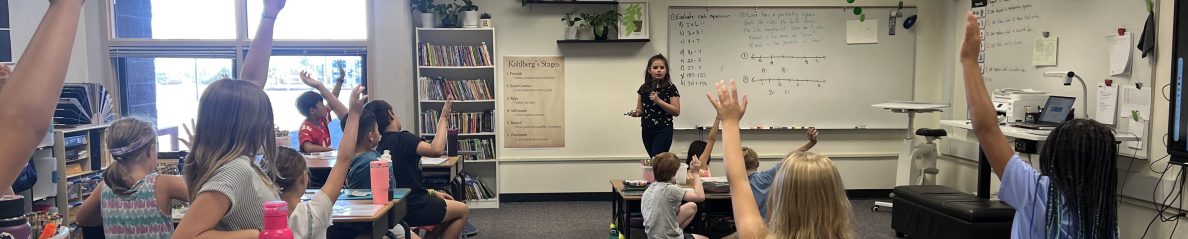
Exploration: How much water is in the world?
Pictures from the 2nd Week of Spring Break
Blending Google Forms with Fraction Work
Today we took an assessment covering multiplication and division of fractions and decimals. I changed things up a bit, however, by having students record their answers in Google Forms. This allows for instant feedback like you see below for me and a way for parents to keep current on student performance. In short, I’ll likely be doing this again.

Masterpiece Art for February
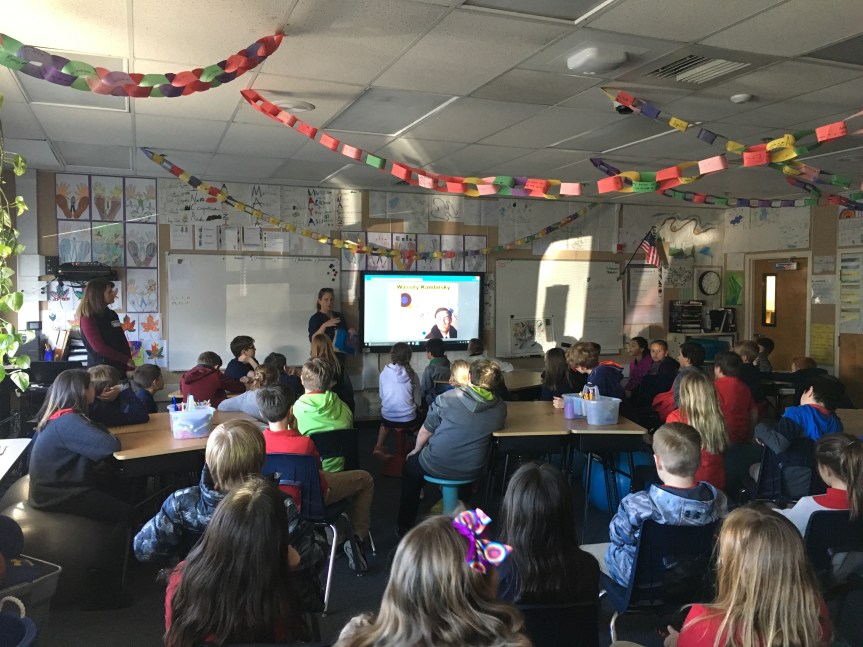
One of the great things about Roy Gomm is the consistent exposure to the arts that students receive. In part, the Masterpiece Art program, led by parent volunteers, aids this. This week parents led students through an exploration of work by Wassily Kandinsky.
The finished art will be displayed in the Gomm multipurpose room.

Zooming In
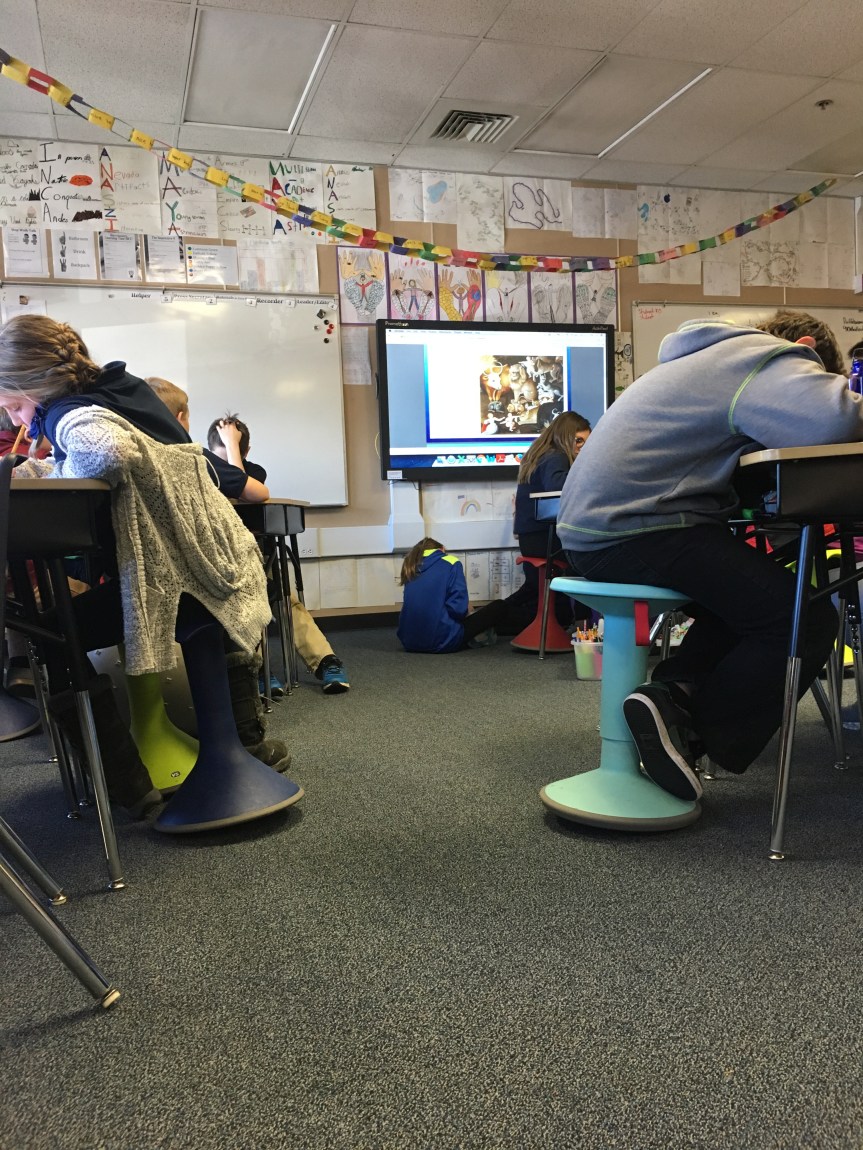
Today we completed a Zoom In. In this case we took a careful look at Edward Hicks’ Peaceable Kingdom. This is an instructional strategy first introduced to me by Angela Orr which she describes as follows:
The Zoom-In Strategy is an excellent way for you to have students participate in document analysis in a new way. Zoom-In’s are images that have been manipulated so the students only see a portion of the image, rather than the whole thing at one time. Students often struggle to identify the nuances in art, details in a photograph, or historical significance of terms or images chosen by an author/artist/photographer/illustrator. Zoom-In’s highlight these nuances and with the use of guiding questions enable students to analyze primary sources in a new way.
The strategy is important insofar as reinforcing the the habit of making claims supported by reasoning and evidence.